[ Tutorials ]
How to Make Your SaaS Successful in 2026: A Founder's Playbook
No growth hacks, no vanity metrics. The six things that actually decide whether a SaaS grows, and how to keep them all pointing in the same direction.

On this page
- TL;DR: the six things that actually move a SaaS
- Start with one painful problem, not a pile of features
- Get your first real users by hand
- Turn sign-ups into a habit, fast
- Keep them: retention beats acquisition
- Price for value, not out of fear
- You cannot improve what you cannot see
- A simple 90-day operating cadence
- Frequently Asked Questions
Most SaaS products do not fail because the code was bad. They fail because nobody could tell, early enough, what was actually working and what was quietly broken.
This is a practical playbook, not a motivational poster. It walks through the six things that actually decide whether a SaaS grows: a sharp problem, your first real users, activation, retention, pricing, and a feedback loop you can see. No growth hacks, no vanity metrics.
TL;DR: the six things that actually move a SaaS
If you only remember one thing, remember this: a successful SaaS is a loop, not a launch. You ship something, you see what it did, you learn, and you do it again a little smarter. Everything below feeds that loop.
- Solve one painful problem for one specific person, before adding features.
- Get your first real users by hand, in the places they already gather.
- Activate them fast, so they reach value in the first session, not the first month.
- Keep them, because retention, not acquisition, is what compounds.
- Price for the value you create, then revisit it as you learn.
- Build a feedback loop you can see, so every decision is informed, not guessed.
Start with one painful problem, not a pile of features
The most common early mistake is building a Swiss Army knife for nobody. A SaaS gets traction when it removes one specific, recurring pain for one specific kind of person, and removes it so well that going back feels worse than switching.
Write down, in one sentence, who you help and what painful thing goes away when they use you. If you cannot say it without the word 'and', your scope is probably too wide. Narrow it until it feels almost uncomfortably specific. You can always expand later, once people love the core.
A useful test: can you name three people, by name, who have this problem badly enough to pay for a fix today? If not, you do not have a positioning problem, you have a research problem, and the cure is talking to more people, not writing more code.
Get your first real users by hand
Your first users will not arrive from a viral loop or a clever ad. You will get them one at a time, by going where they already gather and being genuinely useful before you ever pitch.
Pick the two or three places your specific person actually spends time: a subreddit, a Slack or Discord community, a niche forum, a circle on LinkedIn or X, or simply your own network. Show up, answer questions, share what you are learning. The goal is conversations, not impressions.
Do things that do not scale, on purpose. Onboard people over a call. Set up their account for them. The point is to learn exactly where they get stuck, in their own words, because that is the raw material for everything that follows.
- Communities where your user already asks for help. Answer first, and mention your product only when it truly fits.
- Direct outreach that is personal and specific, never a copy-pasted blast.
- Launch surfaces like Product Hunt or relevant directories, used once your core experience is solid.
- Content and SEO, the slowest channel to start and the one that compounds the longest.
Turn sign-ups into a habit, fast
A sign-up is not a customer. It is a borrowed minute of attention. The job of onboarding is to get a new user to their first real win, the moment the product clicks, before that minute runs out.
Define your activation moment concretely. For a project tool it might be 'created a first project and invited a teammate'. For an analytics tool it might be 'installed the snippet and saw live data'. Then ruthlessly remove every step between sign-up and that moment.
If a new user reaches value in the first session, you have earned the right to ask for a second. If they do not, no amount of re-engagement email will rescue the relationship.
- Cut the fields, steps, and decisions in the first session down to the bare minimum.
- Show value with the user's own data or a realistic sample, never an empty dashboard.
- Nudge gently toward the one action that predicts retention, and ignore the rest for now.
Keep them: retention beats acquisition
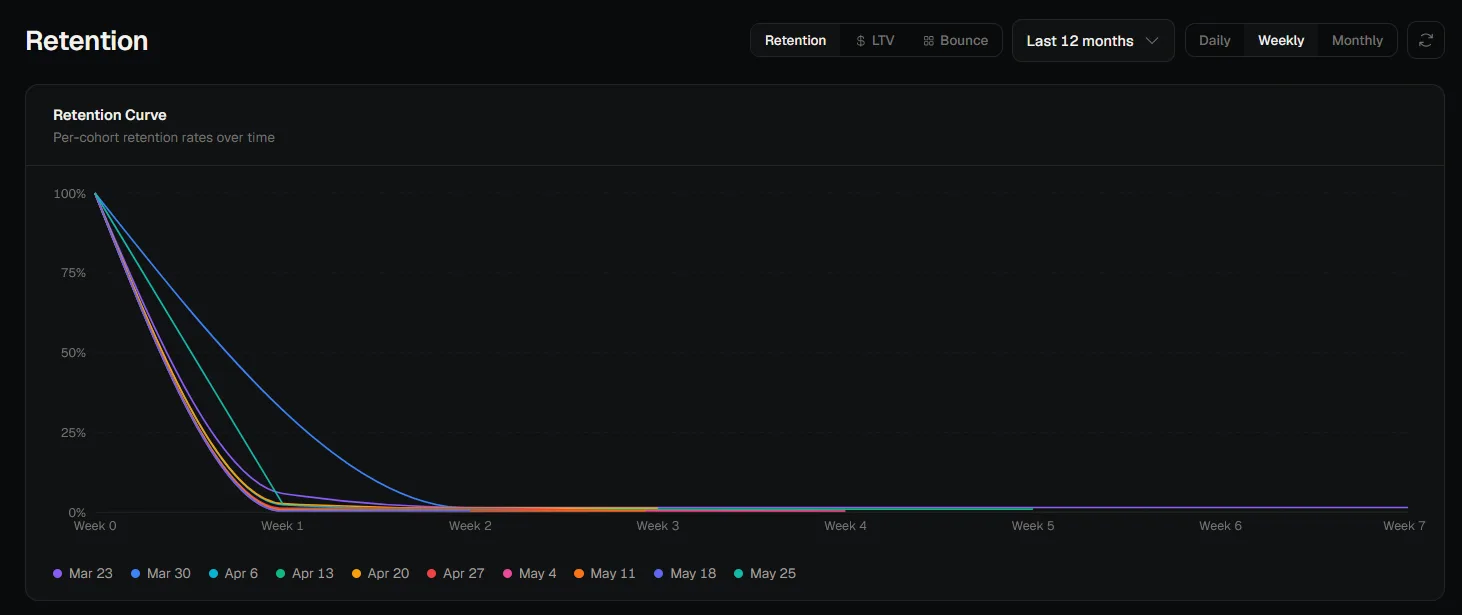
Acquisition gets the attention, but retention is what compounds. Picture your SaaS as a bucket. Every new sign-up pours water in the top. Churn is the hole in the bottom. You can pour faster and faster, but if the hole is big enough, the bucket never fills.
This is why founders who obsess over the top of the bucket while ignoring the leak stay stuck on a treadmill: spend more, grow a little, spend more again. Fixing retention is almost always the cheaper growth lever, because you already paid to acquire those users once.
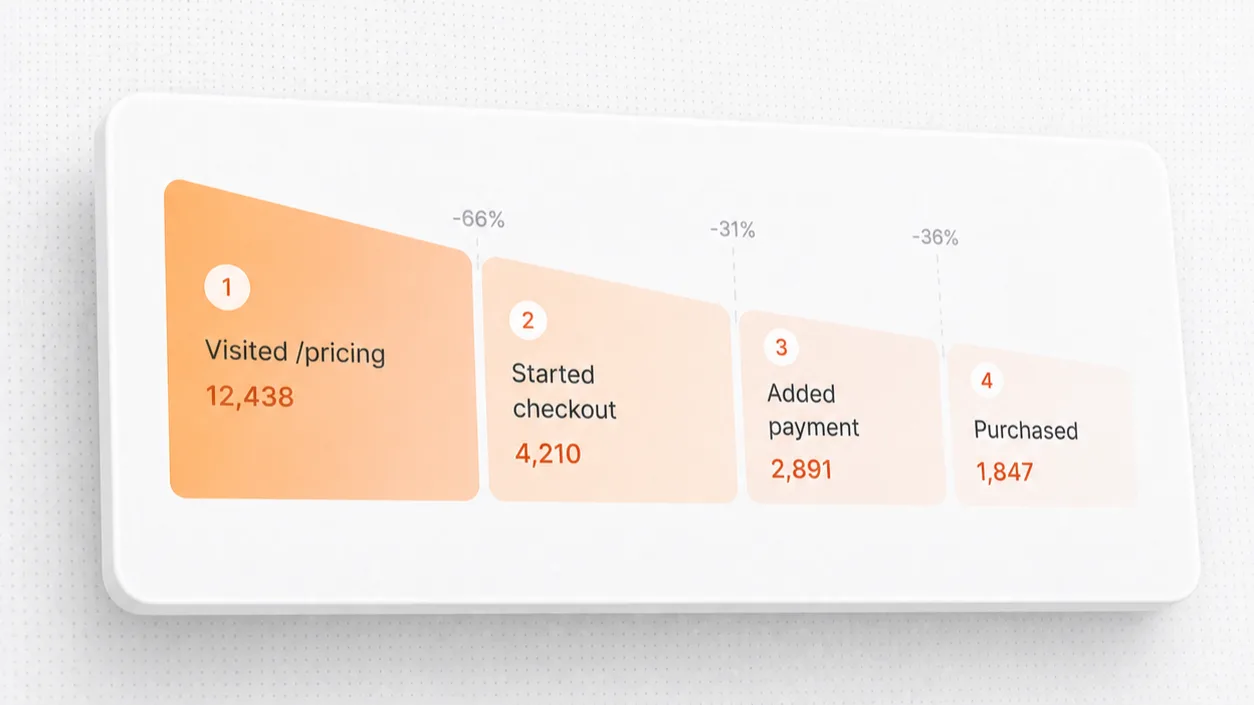
The customers who churn usually tell you first, through behavior. Visits get less frequent, key features go untouched, sessions get shorter. If you can see those signals, you can step in before the cancel button. Map the path people take through your product, like a conversion funnel, and the leak tends to point straight at the step to fix.
Price for value, not out of fear
Most founders price out of fear. They pick a small number because they are scared no one will pay more. That number quietly caps the whole business and, ironically, signals low value to the exact buyers you want.
Anchor your price to the value you create, not to your costs or to the cheapest competitor. If you save a team ten hours a month, or help them earn more, your price should reflect a slice of that, not the cost of a coffee.
Charge early. Free users give you praise; paying users give you the truth. Willingness to pay is the clearest signal that you are solving a problem that actually matters.
- Tie tiers to how value grows for the customer (seats, usage, websites, revenue tracked), so paying more feels fair.
- A real free tier is fine if it helps people reach value, but make the reason to upgrade obvious.
- Treat your first price as a hypothesis, not a vow. Revisit it as you learn.
You cannot improve what you cannot see
Everything above (positioning, activation, retention, pricing) rests on one skill: being able to tell what is really happening. The founders who pull ahead are not the ones with the best guesses. They are the ones with the shortest, clearest loop between a change and its result.
Here is the catch: the loop only works if the measure step is honest. You cannot improve a pricing page you are not watching, know which channel brought paying users if every sign-up is anonymous, or fix the onboarding step where people drop if you cannot see them drop. Most early teams run the loop on guesses, and guesses are expensive.
That measure step has a plain name: web analytics, minus the buzzwords. It answers four questions: where do your visitors come from, what do they do on your site, where do they get stuck, and which of it actually turns into revenue. If that sounds unfamiliar, start with what website analytics actually is.
So here is the plain advice: track your website. Seriously, do it. Once you can see how people actually move through your site, you stop guessing about your visitors and start understanding them, and you get the chance to fix the exact things that are stopping people from converting. That one habit quietly compounds into everything else in this post.
That is really all Zenovay does: it shows you where your visitors come from, what they do, and where they drop off, so you can go fix it. Here is how it fits a SaaS, plus an honest comparison of analytics tools for bootstrapped SaaS if you want to weigh your options first.
A simple 90-day operating cadence
Strategy is easy to admire and hard to run. None of this requires a big team or a big budget. It requires a clear problem, real users, and the honesty to look at what the numbers actually say instead of what you hoped they would say. The simplest way to hold that honesty in place is a steady cadence:
- Weekly: pick one thing to improve (activation, a leaky step, a channel), ship it, and check what moved.
- Monthly: look at retention and revenue by cohort. Are newer users sticking better than older ones? If not, why?
- Quarterly: revisit positioning and pricing with everything you have learned, and cut what is not working.
Frequently Asked Questions
Why do most SaaS startups fail?
Rarely because of bad code. Far more often it is a weak or fuzzy problem, slow activation, or churn that quietly outpaces growth. The common thread is not knowing which of these is the real issue, which is exactly why a clear feedback loop matters so much.
What metrics should an early SaaS track?
Keep the list short: activation rate (how many new users reach first value), retention by cohort, where users drop off, and which channels bring paying customers. Vanity metrics like raw pageviews feel good but rarely change a decision.
Do I need analytics before product-market fit?
Yes, a lightweight setup. You do not need a data team, but you do need to see where users come from, what they do, and where they get stuck. Those signals help you find product-market fit faster instead of guessing. Keep it simple: track the few things that actually change a decision, and ignore the rest.
How long does it take to make a SaaS successful?
Longer than launch-day hype suggests, and shorter than despair suggests. Most durable SaaS businesses are the result of a year or more of tight loops: ship, measure, learn, repeat. Speed comes from the quality of the loop, not from working more hours.